
- Reads the feedback and works out the question or request.
- Makes the change, or adds a clarifying code comment.
- Pushes a new commit to the PR.
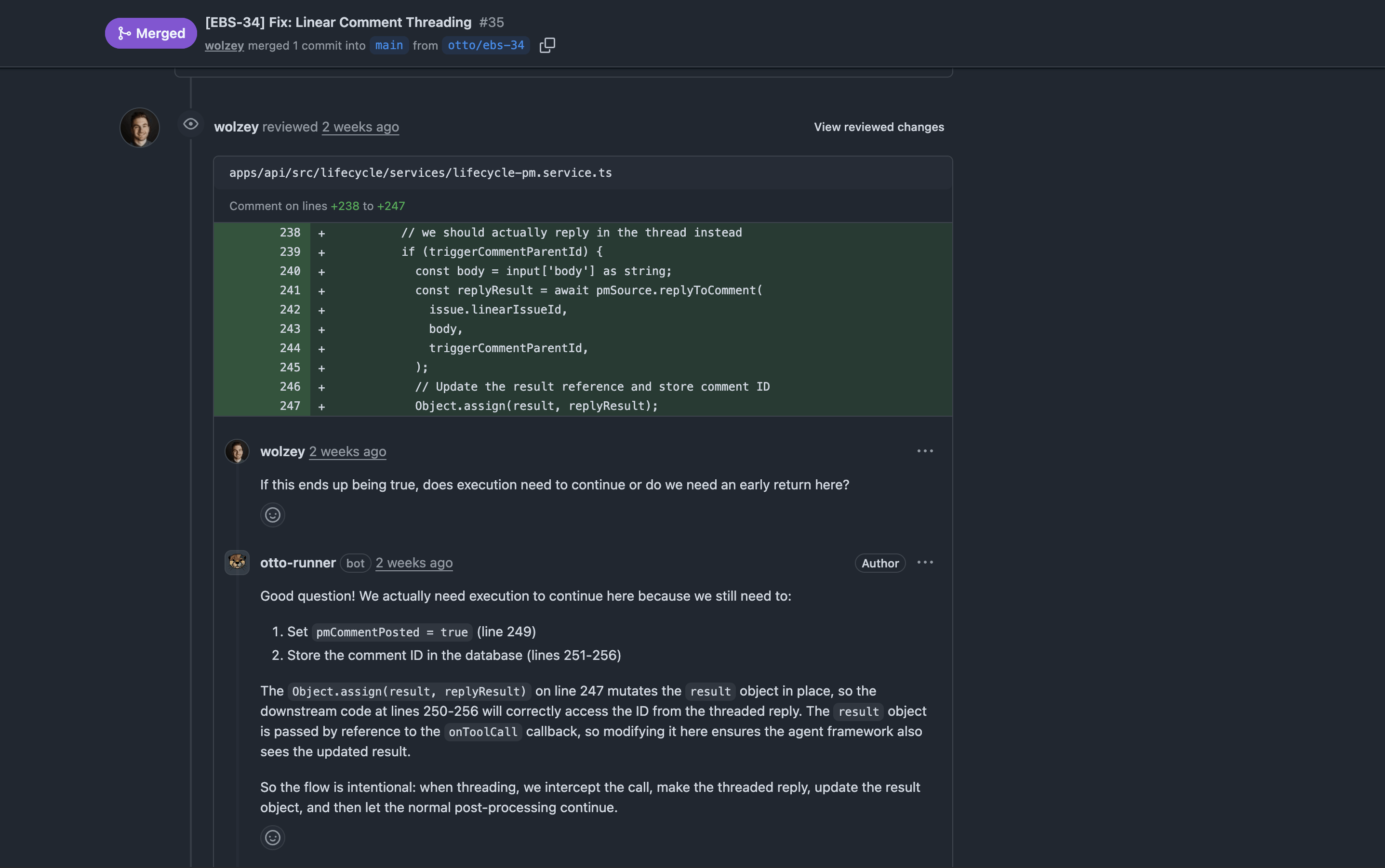
- Replies inline with what changed and why.
Example
What Otto handles well
- Questions about logic: why something was implemented a certain way, with references to the code.
- Code improvements: null checks, validation, early returns, extracting helpers, off-by-one fixes.
- Conventions: naming, types, and patterns used elsewhere in the codebase.
- Bug fixes: edge cases, wrong error codes, race conditions.
Getting the best results
- Be specific. “Validate the email with the existing
isEmailhelper” beats “add validation”. - One topic per comment. Split complex feedback into separate comments.
- Use suggestions. Otto applies GitHub suggested changes directly.
- Ask why. Otto can explain its choices.